When Elon Musk floated the idea of putting servers in space, most people either cheered or rolled their eyes. Systems engineers should do neither. They should recognize the pattern: two radically different architectures, the same stakeholder need, and a genuinely interesting trade space worth examining. I dust off a favorite classroom example from the 2007 INCOSE SE Handbook to show why that kind of architectural imagination — disciplined, not fanciful — is exactly what the Handbook has always asked of us. There is also a free Architecture Alternatives Comparison Worksheet at the bottom, if you want a practical tool to do this in your own program before assumptions quietly harden into designs.
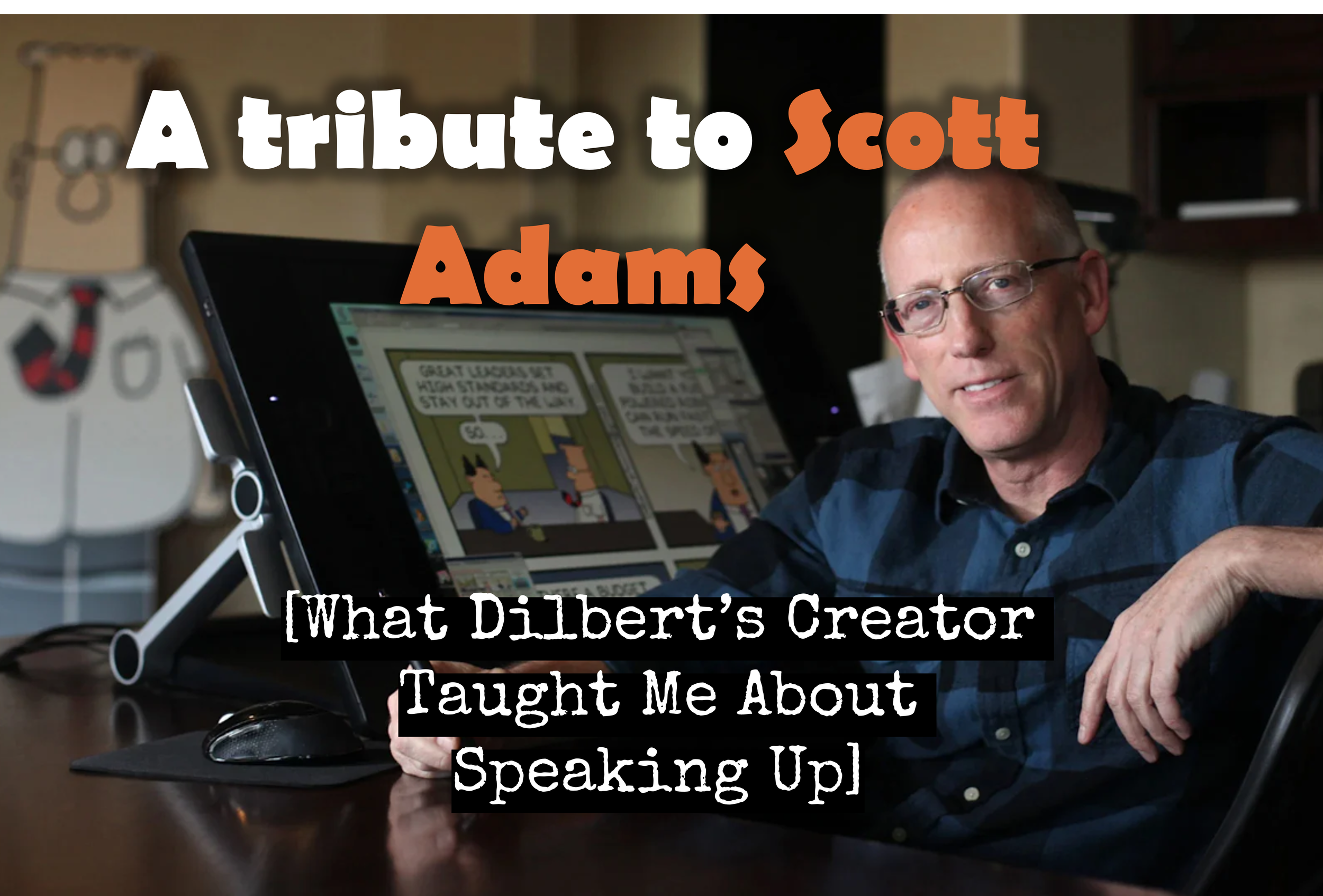
A Tribute to Scott Adams
When I heard that Scott Adams had died, my mind went straight to a filing cabinet — and a folder of Dilbert cartoons I used to pull into SE training sessions whenever a room full of engineers needed permission to say what everyone was already thinking. Adams gave technical professionals exactly that: a way to laugh at broken systems before getting serious about fixing them. This is a tribute to the man who did it better than anyone, and a harder look at what his later career tells us about the cost of speaking uncomfortable truths.
What Boeing’s Woes Can Teach Us About Systems Engineering Risk Practices
Boeing’s recent safety issues highlight how small, accepted risks can accumulate into enterprise-level failure. This article explores what Boeing’s experience teaches systems engineers about risk aggregation, tolerance, culture, and governance—and why disciplined, integrated risk management is essential in complex systems.